

Why Visit India? A Journey Through Its Colours, Culture, Festivals and Flavours
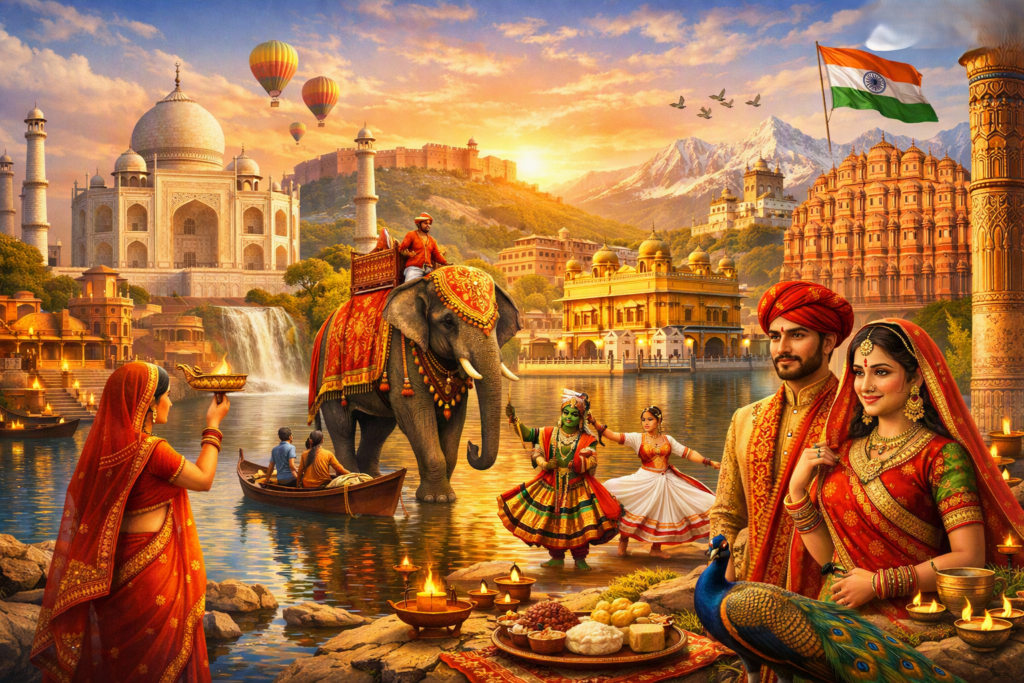
Discover a land where ancient traditions meet modern dreams, where every region tells a different story, and where a simple meal can become one of your most unforgettable travel memories.
Imagine waking up to the sound of temple bells in an ancient city. By afternoon, you are travelling through green tea gardens surrounded by misty mountains. In the evening, you find yourself sharing a delicious meal with strangers who welcome you like an old friend. The next morning, you could be watching camels cross a golden desert or listening to waves roll onto a tropical beach.
Welcome to India.
India is not a destination that can be described in a single sentence. It is a country of extraordinary contrasts, where snow-covered mountains rise above the clouds, rivers flow past sacred cities, palaces recall the lives of kings and queens, and busy streets come alive with the aroma of freshly prepared food.
For some travellers, India is a spiritual journey. For others, it is an adventure through history, wildlife, architecture or cuisine. And for many, the greatest discovery is the warmth of the people and the richness of everyday life.
If you are wondering why India deserves a place on your travel bucket list, the answer is simple: India offers not just places to see, but experiences to feel, stories to discover and memories to carry home.
1. A Country That Feels Like Many Worlds in One
One of the most remarkable things about India is how dramatically its landscape, language, architecture and way of life change as you travel from one region to another.
In the north, the mighty Himalayas create a world of mountain villages, monasteries and breathtaking valleys. In Rajasthan, desert landscapes stretch towards historic forts and magnificent palaces. The eastern states offer ancient temples, tea gardens and rich artistic traditions, while the west combines vibrant cities, coastal scenery and centuries of maritime history.
Travel south and another India unfolds. Coconut palms line tropical waterways, colourful temples rise above busy towns, and the scent of curry leaves, mustard seeds and freshly ground spices drifts from kitchens.
India has 28 states and eight union territories, each with its own identity and local traditions. Although they share a national identity, their cultures can be remarkably different.
This diversity makes India especially rewarding for travellers. A journey through the country can feel like several holidays woven into one unforgettable adventure.
2. Meet the People: Where Everyday Moments Become Memories
Perhaps the most meaningful way to experience India is through its people.
Picture yourself visiting a small tea stall on a busy street. The owner prepares a steaming glass of chai while customers discuss cricket, family news and the day’s plans. A stranger might recommend a nearby attraction, explain how to catch a local bus or suggest a dish you have never tried.
In a village, you might see families gathering in a courtyard, artisans working with traditional tools or neighbours exchanging food during a celebration. In a large city, you may encounter entrepreneurs, students, artists and professionals building lives that combine modern ambitions with long-established customs.
India is home to hundreds of languages and many different religious and cultural communities. Hindi and English are widely used in different contexts, while each region has its own linguistic character, from Bengali and Tamil to Marathi, Gujarati, Punjabi, Malayalam and many others.
Hospitality is an important value in many Indian households. Guests are often welcomed with refreshments, home-cooked food and genuine interest in their journey. Experiences differ between families and regions, of course, but travellers who approach local customs with curiosity and respect can discover a side of India that no monument or guidebook can fully capture.
Sometimes, the memory you treasure most is not the famous landmark you photographed, but the conversation you had with someone along the way.
3. Explore India’s States and Their Special Charms
Every region has something distinctive to offer. Here is a journey through all 28 states, with ideas for what makes each one worth exploring.
Northern India: Mountains, Royal Cities and Sacred Traditions
Jammu and Kashmir’s neighbouring Himalayan region of Himachal Pradesh is a favourite for mountain scenery, while Uttarakhand offers forests, pilgrimage towns and spectacular river valleys. In the wider northern region, historic cities and the landscapes of the Himalayan states provide a wonderful contrast to the plains.
- Himachal Pradesh: Discover Shimla’s colonial-era streets, Manali’s mountain scenery and the peaceful valleys of Spiti. Try local dishes such as siddu, a steamed bread traditionally enjoyed with ghee or chutney.
- Punjab: Experience the energy of Amritsar, visit the Golden Temple and taste rich Punjabi food, including makki di roti, sarson da saag and lassi. The warmth of Punjabi music, dance and hospitality is an attraction in itself.
- Haryana: Explore rural traditions, local fairs and the historic landscapes around Kurukshetra, a city associated with the Mahabharata. Traditional meals often feature wheat breads, dairy products and seasonal vegetables.
- Uttarakhand: Visit Rishikesh and Haridwar for riverfront experiences and spiritual traditions, or head into the hills for trekking and wildlife. The region is also known for foods such as aloo ke gutke and local lentil dishes.
- Uttar Pradesh: Walk through the Mughal-era gardens and monuments of Agra, experience the spiritual atmosphere of Varanasi and discover the historic city of Lucknow. Try Awadhi biryani, kebabs and traditional sweets.
- Rajasthan: Wander through Jaipur’s pink-hued streets, admire the blue city of Jodhpur and explore the desert surroundings of Jaisalmer. Dal baati churma, gatte ki sabzi and colourful handicrafts make this state particularly memorable.
Western India: Forts, Coastlines and Flavours
Western India blends royal history, vibrant cities, creative industries and beautiful coastlines.
- Gujarat: Explore Ahmedabad’s historic architecture, the white salt desert of the Rann of Kutch and the wildlife landscapes of Gir. Gujarati thalis, dhokla, thepla and khakhra offer a delicious introduction to the region’s food culture.
- Maharashtra: Experience Mumbai’s energy, visit the ancient rock-cut caves of Ajanta and Ellora, or explore the hill forts of the Western Ghats. Vada pav, misal pav and Maharashtrian seafood are popular local favourites.
- Goa: Enjoy sandy beaches, Portuguese-influenced architecture, lively markets and laid-back coastal villages. Goan cuisine includes fish curry rice, xacuti and bebinca, a traditional layered dessert.
Southern India: Temple Towers, Tropical Beauty and Living Traditions
Southern India rewards travellers with magnificent temples, classical arts, dramatic coastlines and a distinctive culinary heritage.
- Andhra Pradesh: Visit Tirupati’s famous pilgrimage centre, explore the historic sites of Amaravati and sample regional dishes such as spicy Andhra meals, gongura preparations and pulihora.
- Karnataka: Discover Bengaluru’s contemporary city life, Mysuru Palace’s royal grandeur and Hampi’s remarkable ruins. Enjoy masala dosa, bisi bele bath and the region’s coffee-growing traditions.
- Kerala: Cruise through the backwaters of Alleppey, explore the tea plantations of Munnar and enjoy the greenery of the Western Ghats. Appam, puttu, fish curry and Kerala sadya reflect the state’s rich food culture.
- Tamil Nadu: Admire the towering gopurams of Madurai and the architectural splendour of the Great Living Chola Temples. Sample idli, dosa, sambar and Chettinad cuisine, while discovering classical music and Bharatanatyam dance.
- Telangana: Explore Hyderabad’s Charminar, historic bazaars and impressive forts. The city’s celebrated biryani, haleem and Irani chai are essential experiences for food lovers.
Eastern India: Art, Temples and Tea Gardens
Eastern India has a remarkable mix of religious heritage, literary traditions, tribal cultures, river landscapes and regional cuisine.
- Bihar: Discover Bodh Gaya, one of the world’s most important Buddhist pilgrimage destinations, and explore the ancient history of Nalanda. Litti chokha is a well-known regional dish.
- Jharkhand: Experience forested landscapes, waterfalls and the cultural traditions of numerous Adivasi communities. Local food often includes rice-based dishes, leafy vegetables and seasonal ingredients.
- Odisha: Visit the Sun Temple at Konark, explore the temples of Bhubaneswar and experience the spiritual energy of Puri. Odisha is known for pakhala bhata, seafood and the sweet delicacy chhena poda.
- West Bengal: Explore Kolkata’s historic streets, literary culture and grand colonial-era buildings, or visit Darjeeling’s tea gardens and mountain viewpoints. Try Bengali fish preparations, kathi rolls and rasgulla.
Central India: Ancient Kingdoms and Wildlife Adventures
- Chhattisgarh: Discover waterfalls, forest landscapes, traditional crafts and the diverse cultural heritage of the region’s tribal communities. Local food includes rice-based dishes and preparations made from forest and seasonal ingredients.
- Madhya Pradesh: Explore the temples of Khajuraho, the Buddhist monuments of Sanchi and the historic fort city of Gwalior. The state is also known for tiger reserves and the street-food traditions of Indore, including poha and jalebi.
Northeastern India: A Different Kind of Adventure
The Northeast is one of India’s most rewarding regions for travellers seeking green landscapes, distinctive cultures, traditional crafts and less familiar routes.
- Arunachal Pradesh: Discover misty mountains, Buddhist monasteries and remote valleys. Tawang is particularly notable for its monastery and Himalayan scenery.
- Assam: Travel through tea-growing landscapes, explore Guwahati and visit Kaziranga National Park, famous for its greater one-horned rhinoceroses. Assamese thalis, fish preparations and pitha are regional highlights.
- Manipur: Experience classical Manipuri dance, traditional handloom weaving and the remarkable Loktak Lake, known for its floating vegetation islands.
- Meghalaya: Explore Shillong, the waterfalls around Cherrapunji and the living root bridges created by generations of local communities. The region is ideal for nature lovers and photography enthusiasts.
- Mizoram: Discover green hills, scenic viewpoints, traditional Mizo culture and the lively atmosphere of Aizawl. The state’s landscapes offer a quieter alternative to India’s major tourist circuits.
- Nagaland: Learn about the traditions, crafts and community life of its many Naga peoples. The Hornbill Festival, held in December, showcases a variety of cultural performances and artistic traditions.
- Sikkim: Enjoy views of the eastern Himalayas, visit Buddhist monasteries and explore mountain towns such as Gangtok. Momos, thukpa and traditional fermented foods reflect the region’s Himalayan influences.
Travel tip: Some northeastern destinations require permits or special arrangements, and road conditions can be affected by weather. Check current entry requirements before planning your trip.
4. India’s Festivals: When the Whole Country Tells a Story
If there is one time when India’s diversity becomes especially visible, it is during its festivals.
Imagine a neighbourhood glowing with lamps, families preparing sweets and children waiting excitedly for the evening celebrations. Elsewhere, a temple town may be filled with music and processions, while a village prepares for a harvest festival rooted in centuries of agricultural tradition.
Indian festivals are not simply events to watch. They are occasions to understand family relationships, religious beliefs, regional history, food and community life.
Diwali: The Festival of Lights
Diwali is among India’s best-known festivals. Homes and public spaces are decorated with lamps and lights, families exchange gifts and sweets, and many communities celebrate themes of light, renewal and the triumph of good over evil.
The exact traditions vary by region and religious community. For a visitor, the most memorable moments may be the glow of decorated streets, the aroma of festive food and the excitement of families preparing for celebrations.
Holi: A Celebration of Colour
Holi welcomes spring in many parts of India. Coloured powders, music, dancing and festive foods transform streets and gathering places into scenes of joyful celebration.
Experiences vary considerably by location, so choose organised or locally recommended celebrations, wear clothes you do not mind staining and ask permission before applying colour to others.
Navratri and Durga Puja: Devotion Through Dance and Art
In Gujarat, Navratri is famous for nights of garba and dandiya raas, where people gather in colourful traditional clothing to dance in circles to energetic music.
In West Bengal, Durga Puja transforms Kolkata and surrounding areas with elaborate artistic installations, beautifully decorated pandals, cultural performances and community gatherings.
These celebrations demonstrate how a shared festival can develop distinctive regional expressions.
Pongal and Onam: Celebrating the Harvest
Tamil Nadu celebrates Pongal with traditional rice dishes, decorated homes and expressions of gratitude for the harvest.
In Kerala, Onam brings families together for the Onam sadya, a festive vegetarian meal served with a variety of dishes, often on a banana leaf. Floral decorations, cultural performances and traditional boat races are among its attractions.
Baisakhi and Bihu: Celebrations of Agriculture and Community
Baisakhi is an important harvest festival in Punjab and also holds deep significance in Sikh history.
In Assam, Bihu celebrations mark different points in the agricultural calendar, with music, dancing, traditional clothing and food playing important roles.
Ganesh Chaturthi: A Festival of Faith and Community
Maharashtra, particularly Mumbai and Pune, is known for its vibrant Ganesh Chaturthi celebrations. Devotees welcome Lord Ganesha with prayers, music, decorations and community events.
Visitors can appreciate the artistry of the idols and public celebrations while respecting religious practices and choosing environmentally responsible festivities where possible.
More Festivals Worth Discovering
India’s festival calendar is far richer than these examples. Eid celebrations, Christmas, Buddha Purnima, Janmashtami, Rath Yatra, the Pushkar Camel Fair, Hornbill Festival and many local harvest and temple festivals offer different ways to explore the country’s traditions.
Dates often change according to lunar calendars or local observances. Check the calendar before booking, especially if you want to experience a particular celebration.
5. Indian Food: A Journey Through a Thousand Flavours
Ask a traveller what they remember most about India, and food is likely to feature near the top of the list.
Indian cuisine is not one single style of cooking. It is a collection of regional food traditions shaped by geography, climate, agriculture, religion, trade and family recipes.
A breakfast in South India might begin with soft idlis and coconut chutney. In North India, you could enjoy parathas with yoghurt and pickles. In Gujarat, a thali might bring together sweet, savoury, tangy and spicy flavours. Along the coast, fresh seafood meets coconut, tamarind and fragrant spices.
Even familiar dishes change character from one region to another.
Dishes You Should Try
Biryani: Fragrant rice cooked with spices and other ingredients, with distinctive regional versions in Hyderabad, Lucknow, Kolkata and elsewhere.
Masala dosa: A crisp rice-and-lentil crepe, often filled with spiced potatoes and served with chutneys and sambar.
Gujarati thali: A selection of regional dishes served together, often including vegetables, lentils, breads, rice and accompaniments.
Rajasthani dal baati churma: A traditional combination of lentils, baked wheat balls and a sweet, crumbly preparation.
Punjabi chole bhature: Spiced chickpeas served with deep-fried bread, popular in North Indian food culture.
Bengali fish curry: Fish prepared with regional spices and sauces, often served with rice.
Kerala sadya: A festive vegetarian spread featuring multiple dishes, typically served on a banana leaf.
Goan fish curry: A coastal favourite that often combines fish, coconut and tangy spices.
Momos and thukpa: Popular Himalayan and northeastern food experiences influenced by regional and neighbouring culinary traditions.
Indian sweets: From gulab jamun and jalebi to rasgulla, peda and Mysore pak, desserts reveal another layer of regional identity.
The Joy of Indian Street Food
Some of India’s most memorable food experiences happen at street stalls and local markets.
You might hear the crackle of a hot griddle, watch a vendor assemble a plate of chaat or smell fresh pav bhaji cooking in butter. These lively food scenes offer an insight into daily life and the creativity of Indian cooking.
Start with busy vendors who prepare food fresh, observe basic hygiene and drink sealed bottled water or properly treated water. If you have a sensitive stomach, choose freshly cooked, piping-hot food and introduce unfamiliar dishes gradually.
Vegetarian travellers will find a wide variety of options, but ingredients and preparation methods differ. If you have allergies or dietary restrictions, explain them clearly and confirm how dishes are prepared.
The best way to explore Indian food is to arrive curious, try something new and leave room for one more bite.
6. Discover India’s Magnificent Architecture and History
India’s monuments tell stories of empires, religious movements, artistic achievements and centuries of cultural exchange.
The Taj Mahal in Agra is one of the country’s most recognisable landmarks. Its white marble surfaces, intricate inlay work and carefully planned gardens create an unforgettable sight, particularly in the softer light of early morning.
But the Taj Mahal is only the beginning.
In Rajasthan, forts and palaces reveal the splendour of historic royal courts. In Delhi, Mughal monuments stand alongside colonial-era buildings and contemporary neighbourhoods. In Karnataka, the ruins of Hampi preserve the extraordinary legacy of the Vijayanagara Empire.
The temples of Tamil Nadu and Odisha demonstrate the sophistication of traditional Indian architecture, with intricate stone carvings and towering gateways. The Ajanta and Ellora caves in Maharashtra reveal centuries of religious art and craftsmanship.
In the Northeast, monasteries and traditional settlements reflect different cultural influences and local building styles.
For a more personal experience, consider hiring a knowledgeable local guide. A building becomes far more interesting when you understand who built it, why it mattered and how people used it.
When visiting religious sites, dress respectfully, follow photography rules and check whether shoes must be removed before entering.
7. Beyond the Cities: India’s Mountains, Beaches and Wildlife
India is an excellent destination for travellers who want more than sightseeing.
Mountains and Tea Gardens
The Himalayas offer opportunities for trekking, mountain photography and peaceful stays surrounded by dramatic scenery. Destinations such as Himachal Pradesh, Uttarakhand and Sikkim attract travellers looking for fresh air, walking trails and spectacular views.
Darjeeling and Munnar offer a different kind of mountain experience, with rolling tea gardens, winding roads and cooler temperatures.
Beaches and Tropical Backwaters
Goa attracts visitors with its beaches, coastal villages and relaxed atmosphere. Kerala offers palm-fringed shores and tranquil backwater journeys through interconnected waterways.
For something more remote, the Andaman and Nicobar Islands provide tropical scenery, although access and activities vary by island and local restrictions.
Wildlife and Nature
India’s national parks and wildlife reserves protect a remarkable range of habitats and species.
Kaziranga in Assam is renowned for its greater one-horned rhinoceroses. Ranthambore in Rajasthan and several reserves in central India are known for tiger conservation and wildlife safaris.
The Western Ghats support exceptional biodiversity, while India’s wetlands, grasslands and forests provide habitats for many birds and other wildlife.
Choose responsible operators, follow park rules and keep a respectful distance from animals. Wildlife sightings are never guaranteed, and the quality of an experience should not be measured only by how many animals you see.
8. The Spiritual Side of India
For centuries, India has attracted pilgrims, philosophers and travellers interested in the meaning of life, meditation and spiritual traditions.
Varanasi, on the banks of the Ganges, is known for its ancient riverfront ghats, religious ceremonies and strong connection to Hindu traditions. Rishikesh attracts visitors interested in yoga, meditation and the Himalayan foothills.
Bodh Gaya is a major Buddhist pilgrimage destination associated with the enlightenment of Gautama Buddha. Amritsar’s Golden Temple welcomes visitors from different backgrounds and is known for its community kitchen, where meals are served to people regardless of background.
India is also home to significant Jain, Christian, Muslim, Sikh and other religious heritage sites.
You do not need to follow a particular religion to appreciate these places. Visitors can learn by observing respectfully, listening to local explanations and understanding that sacred spaces are first and foremost places of worship for the communities who use them.
If you visit a ceremony, avoid intrusive photography and follow the guidance of local staff or worshippers.
9. Shopping in India: Bring Home a Piece of Its Story
Shopping in India can be a cultural experience in its own right.
In Jaipur, you can browse textiles, jewellery and traditional block-printed fabrics. In Varanasi, silk weaving has a long and celebrated history. Gujarat offers embroidered textiles, handicrafts and distinctive regional fabrics, while Kashmir is known for fine embroidery, carpets and traditional craftwork.
Local markets also sell spices, tea, pottery, leather goods, wooden carvings and handmade souvenirs.
Instead of buying the first item you see, take time to learn about the craft and the people who make it. Ask about the material, origin and production method. Buying directly from reputable artisans or cooperatives can help support traditional skills and local livelihoods.
Bargaining is common in some markets, but not everywhere. Keep it friendly, respect the seller’s time and agree on a price before completing a purchase.
Be cautious with wildlife products, antiques and items made from protected materials. Check customs rules before bringing souvenirs home.
10. When Is the Best Time to Visit India?
India is a large country with several climate zones, so there is no single ideal month for every destination.
October to March: Often a good period for many popular northern, central and western destinations, with generally more comfortable sightseeing conditions in numerous areas. Winter can still be cold in the mountains.
April to June: Temperatures can become extremely hot in the plains, but this period can work for some Himalayan destinations and high-altitude regions, depending on snow and road conditions.
June to September: The southwest monsoon brings rain to many regions. Landscapes become lush, and some destinations are especially beautiful, but heavy rain can disrupt travel and cause flooding or landslides.
These are broad patterns rather than guarantees. Southern India, the Himalayas and the Northeast can experience different conditions, and the timing and strength of monsoon rainfall vary.
Before travelling, check local weather forecasts, road conditions, seasonal closures and festival dates for your chosen destinations.
11. How to Plan Your First Trip to India
India is too diverse to explore properly in a single short holiday. Rather than rushing through ten cities, choose a region that matches your interests and allow time to enjoy it.
If You Love History and Iconic Landmarks
Consider Delhi, Agra and Jaipur. This classic route introduces you to historic monuments, Mughal architecture, royal palaces, markets and North Indian cuisine.
If You Love Food and Culture
Explore Mumbai, Ahmedabad or Kolkata, depending on your interests. Combine guided heritage walks with local markets, regional meals and time to discover neighbourhood life.
If You Prefer Nature and Relaxation
Consider Kerala’s backwaters and hill stations, Goa’s coastline or a carefully planned Himalayan holiday.
If You Want a Spiritual Journey
Look at Varanasi, Bodh Gaya, Amritsar or Rishikesh, depending on the traditions and experiences you want to learn about.
If You Have Two Weeks
Choose one or two neighbouring regions rather than trying to cover the whole country. For example, a northern India itinerary might combine Delhi, Agra and Jaipur with additional time in one destination, while a Kerala trip could combine Kochi, Munnar and the backwaters.
Travel times can be longer than they appear on a map, so leave room for delays and rest.
12. Practical Travel Tips for a Comfortable Journey
A little preparation can make your visit more enjoyable.
- Visa and entry requirements: Check the latest official Indian visa requirements for your nationality before booking. Use the official Indian visa website rather than relying on unofficial application services.
- Getting around: India has extensive rail and road networks, domestic flights and app-based transport in many cities. Book popular train journeys in advance and confirm station locations carefully.
- Money: Carry a suitable payment card and some Indian rupees for small purchases. Payment acceptance varies by business and location.
- Clothing: Choose lightweight clothing for hot weather and modest attire for many religious sites. Bring warm layers if visiting mountains or travelling in winter.
- Health and water: Follow current travel-health advice, practise food and water precautions and carry any regular medication you need.
- Local customs: Ask before photographing people, respect religious practices and learn a few local greetings where possible.
- Personal safety: Use reputable transport, keep valuables secure and be cautious with unfamiliar offers or unofficial guides.
- Responsible travel: Reduce single-use plastic, respect local communities, avoid exploitative animal attractions and support genuine local businesses.
Travellers should also check official advisories and local restrictions before visiting remote areas, border regions or destinations affected by severe weather.
13. India for Families: A Holiday Full of Discovery
India can be a rewarding destination for families because its attractions span history, wildlife, food, nature and hands-on cultural experiences.
Children might enjoy seeing the Taj Mahal, riding a boat through Kerala’s backwaters, watching traditional crafts being made or spotting birds on a guided nature walk. Markets, colourful festivals and regional food can turn an ordinary day into an opportunity to learn about the world.
Families should plan realistic travel days, select accommodation with suitable facilities and allow time for meals and rest. Long journeys, heat and crowded places can be tiring for younger children.
For a first visit, a well-planned itinerary with a few carefully chosen destinations is often more enjoyable than trying to see everything.
The best family trips are not necessarily the ones with the longest sightseeing list. They are the ones that leave everyone with stories to tell.
14. Why India Stays With You Long After You Leave
There is a moment in many journeys through India when the individual experiences begin to connect.
Perhaps it happens while watching the evening light fall across an ancient monument. Perhaps it is during a festival when a whole neighbourhood gathers to celebrate. Or perhaps it happens at a simple roadside restaurant, when a freshly prepared meal tastes better than you expected and the people around you make you feel welcome.
You begin to realise that India’s appeal lies not in one monument, one dish or one landscape, but in the relationship between them.
Its history lives in its architecture. Its regional identity lives in its languages and food. Its traditions are carried forward through music, festivals, family gatherings and craftsmanship. Its natural beauty stretches from mountain peaks to tropical shores.
India can be busy, challenging and wonderfully unpredictable. Distances are long, cities can be crowded, and travelling between regions sometimes requires patience. Yet these contrasts are part of what makes the country such a fascinating destination.
Approach India with an open mind, respect for local customs and a willingness to explore beyond the familiar sights. You may discover that the most meaningful part of your journey is something you never planned to experience.
Final Thoughts: Make India Your Next Great Adventure
Why visit India?
Come for the Taj Mahal, but stay for the stories behind it. Come for the food, but discover the traditions that shape every regional dish. Come for the festivals, but learn about the communities that bring them to life. Come for the mountains, beaches and palaces, but leave room for the unexpected moments in between.
Whether you are planning your first holiday, travelling with children, searching for authentic food experiences or dreaming of a journey through history and culture, India offers countless ways to make your trip personal.
You do not have to see all of India in one visit. Choose a region, follow your curiosity and allow the journey to unfold.
India is more than a destination on a map. It is a collection of living stories, waiting to become part of yours.
Ready to begin your journey? Explore more destination guides, cultural discoveries, family-friendly itineraries and practical travel tips with Dolphin Travelers — Your Journey Starts Here. Destinations