

Singapore Neighbourhoods: A Guide to Chinatown, Little India & More
Singapore is often introduced through its famous skyline, modern attractions and impressive architecture.
But spend a little more time here and you will discover another side of the city.
Walk through a heritage neighbourhood and the atmosphere changes. Modern towers give way to colourful shophouses. Busy roads become quieter streets. The smell of local food drifts from small restaurants and hawker centres.
This is where Singapore becomes more than a list of attractions.
Its neighbourhoods tell stories about the people, cultures and traditions that have helped shape the city.
Why Explore Singapore’s Neighbourhoods?
Singapore is a multicultural city, and its neighbourhoods offer visitors an opportunity to experience that diversity through food, architecture, places of worship, shops and everyday life.
You do not need to spend an entire day in every neighbourhood.
Even a few hours of walking, eating and exploring can give you a completely different impression of the city.
The best approach is to slow down.
Look at the buildings, explore the smaller streets and stop when something catches your attention.
Chinatown — Heritage, Food and Colour
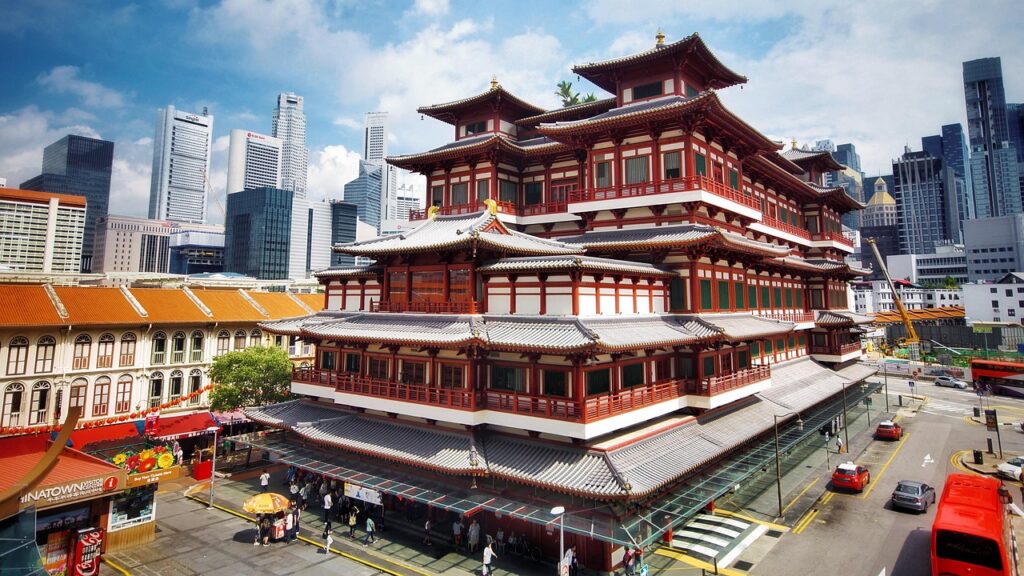
Chinatown is one of Singapore’s most recognisable neighbourhoods.
The area combines historic shophouses, temples, restaurants, traditional businesses and modern cafés.
One of the pleasures of visiting Chinatown is simply walking around.
You can begin near the main attractions and gradually explore the surrounding streets.
Look up at the colourful architecture and notice how traditional buildings sit alongside modern developments.
What to Experience in Chinatown
Spend some time exploring the historic streets and visiting places of worship.
Food is another major reason to visit.
You can find traditional Singaporean dishes, Chinese cuisine, snacks and drinks throughout the area.
If you enjoy photography, Chinatown also offers plenty of colourful details, especially around the older shophouses.
When to Visit
Morning can be a comfortable time for walking before the weather becomes hotter.
Evening offers a different atmosphere, with restaurants becoming busier and the neighbourhood taking on a livelier feel.
Little India — Colour, Culture and Flavour
Little India offers one of the most colourful experiences in Singapore.
The neighbourhood is filled with vibrant buildings, flower garlands, restaurants, spice shops and temples.
Walking through the streets can feel like entering a completely different part of the city.
And that is part of what makes Singapore so interesting.
Within a relatively short distance, the atmosphere can change dramatically.
Food in Little India
Food is an important part of the experience.
You can find Indian restaurants serving everything from simple meals to elaborate dishes.
If you are visiting with children or travelling with someone who has never tried Indian food, consider ordering a few different dishes to share.
Trying something new together can become one of the memorable moments of the trip.
Explore at Your Own Pace
Do not rush through Little India simply to take photographs.
Spend some time looking at the architecture, browsing shops and observing everyday life.
The neighbourhood is best experienced slowly.
Kampong Glam — History Meets Creativity
Kampong Glam offers another fascinating side of Singapore.
The area around Sultan Mosque provides a striking landmark, while the surrounding streets combine heritage buildings with cafés, restaurants, shops and creative businesses.
The neighbourhood has a lively atmosphere and is particularly enjoyable for travellers who like photography and independent shops.
Haji Lane and the Surrounding Streets
The smaller streets around Kampong Glam are worth exploring on foot.
Colourful walls, murals, cafés and independent businesses create plenty of opportunities to stop and look around.
You do not need a strict itinerary here.
Arrive, walk around and see where the streets take you.
Joo Chiat and Katong — A Taste of Peranakan Heritage
Joo Chiat and Katong offer a quieter experience compared with some of Singapore’s busier tourist areas.
The neighbourhood is known for colourful shophouses, local food and its connection to Peranakan culture.
The architecture alone makes the area worth exploring.
Rows of beautifully detailed buildings create a very different visual experience from the skyscrapers of central Singapore.
Food to Look Out For
This area is also known for local food and traditional flavours.
Take your time to explore the restaurants, cafés and food shops.
You may discover something that never appeared on your original itinerary.
That is often the fun of exploring neighbourhoods.
Orchard Road — Singapore’s Shopping District
Orchard Road is very different from Chinatown, Little India or Joo Chiat.
Here, shopping centres and modern retail dominate the landscape.
For travellers who enjoy shopping, it is an obvious stop.
But even if shopping is not your main interest, Orchard Road can be useful as part of a wider city itinerary.
There are restaurants, cafés and places to take a break between sightseeing activities.
Marina Bay — The Modern Face of Singapore
Marina Bay is where you can see the modern side of Singapore at its most dramatic.
The skyline, waterfront and major architectural landmarks create an atmosphere that feels completely different from the heritage neighbourhoods.
Visit during the day for views across the bay.
Then return after sunset if you can.
The lights reflecting across the water create a completely different experience.
This contrast between old neighbourhoods and modern districts is one of the things that makes Singapore so fascinating.
How to Explore Singapore’s Neighbourhoods
You do not need to visit every neighbourhood in one trip.
Choose two or three that match your interests.
For food and heritage, consider Chinatown and Little India.
For culture, architecture and cafés, explore Kampong Glam.
For colourful shophouses and local atmosphere, consider Joo Chiat and Katong.
For shopping, Orchard Road is an obvious choice.
And for modern architecture and evening views, spend time around Marina Bay.
Give Yourself Time to Wander
The most important tip is simple:
Do not rush.
Some of the best discoveries happen between the major attractions.
A small shop, an interesting building, a quiet street or an unexpected meal can become one of the memories you take home.
A Simple Neighbourhood Day
If you have one full day available, you could combine several areas.
Start your morning in Little India and explore the streets before the afternoon heat.
Continue to Kampong Glam for lunch and a walk around the heritage area.
Later, travel towards Marina Bay and finish your day with an evening walk beside the waterfront.
This gives you a taste of several different sides of Singapore without trying to see everything.
Final Thoughts
Singapore’s famous attractions may bring you to the city, but its neighbourhoods can help you understand it.
They show the relationship between Singapore’s past and present.
They reveal different cultures through food, architecture and everyday life.
And most importantly, they give you opportunities to slow down and experience the city rather than simply photograph it.
So when you plan your Singapore trip, leave some space between the major attractions.
Walk a little further.
Take a different street.
Stop for a local meal.
Look around.
You may discover that your favourite Singapore memory was never on your original itinerary.
For more ideas and attractions, read our Singapore Travel Guide.
Explore More Singapore
Planning your first visit? Start with our Singapore Travel Guide for attractions, food, transport, family experiences and practical travel tips.
Travelling with children? Read our Singapore with Children: Family Travel Guide for ideas to make your family holiday more comfortable and enjoyable.